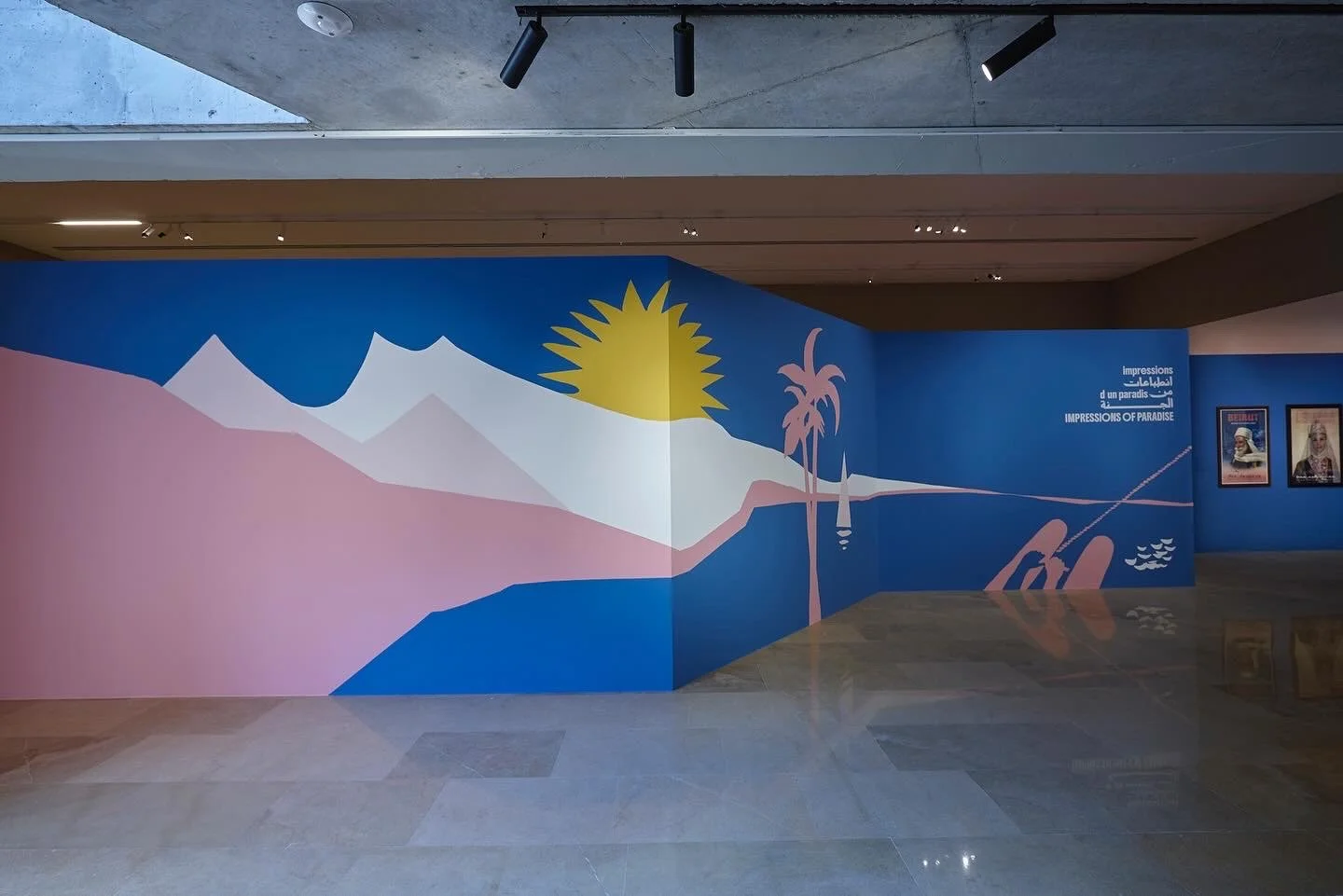
Impressions of Paradise
Travel, Tourism, and the Visual Performance of Modern Lebanon
June 2025 | Beirut, Lebanon
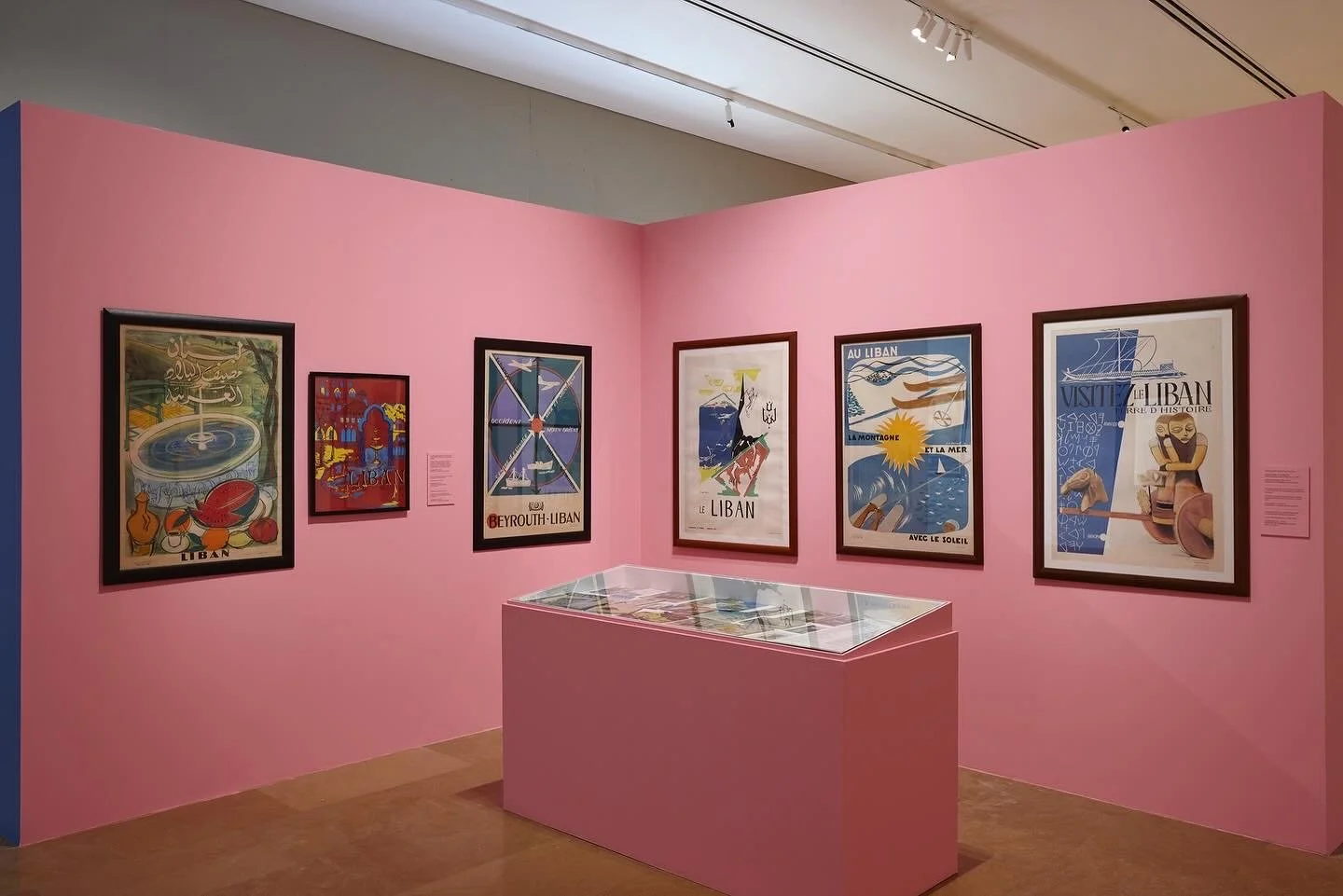
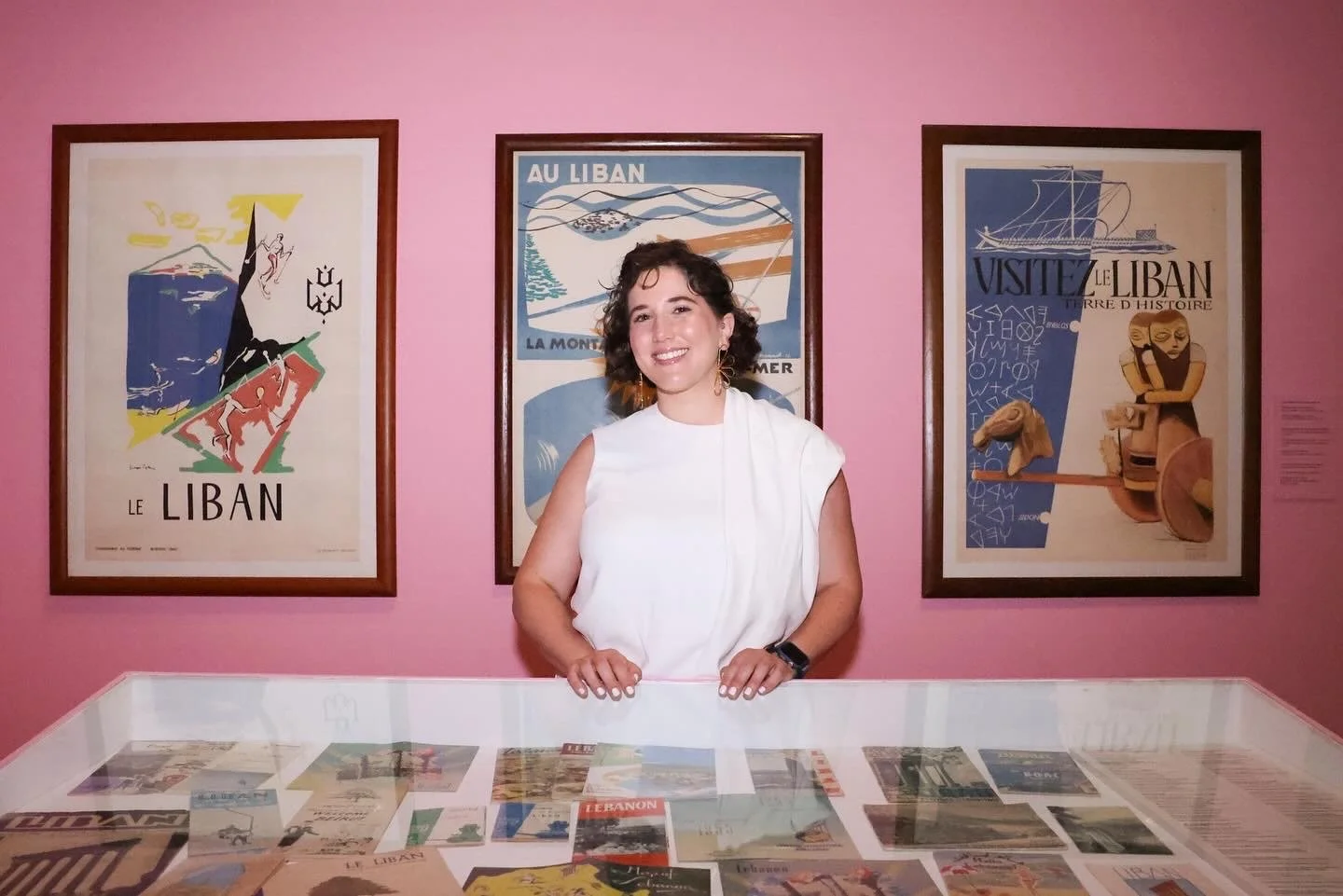
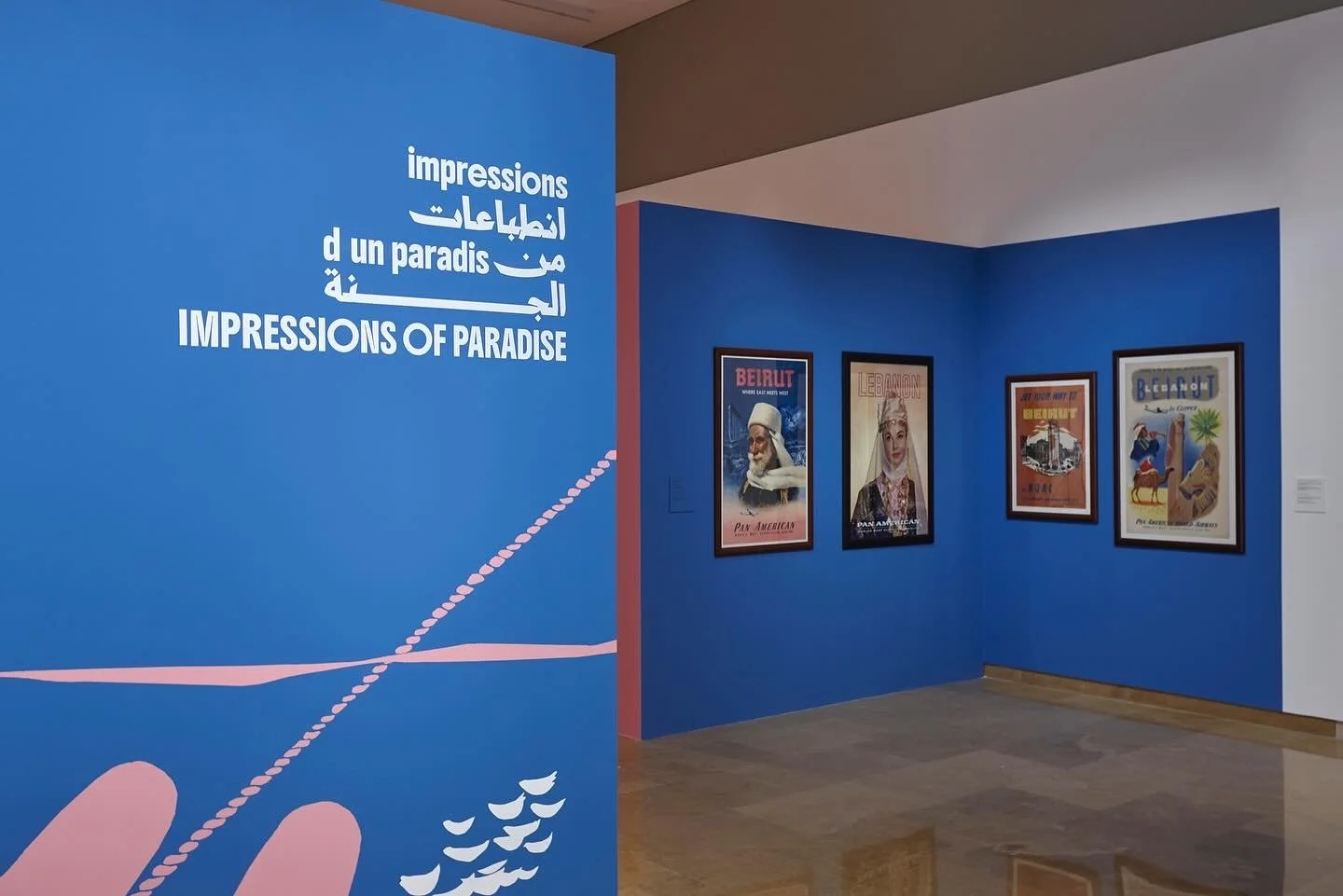
Impressions of Paradise brings together a rare selection of original posters and archival documents of travel, tourism, and cinema from the Philippe Jabre art collection. Produced between the 1920s and the 1970s, these prints shimmer with the promise of sun-drenched coasts, ancient ruins, picturesque Mountainous villages, and charming cosmopolitan cities. Their palettes are vivid, their lines elegant, their compositions finely tuned to delight. But beneath this surface of ease and escape lies a more complex narrative—one in which image-making intersects with cultural representation, promotional strategy, and constructed ideals of place.
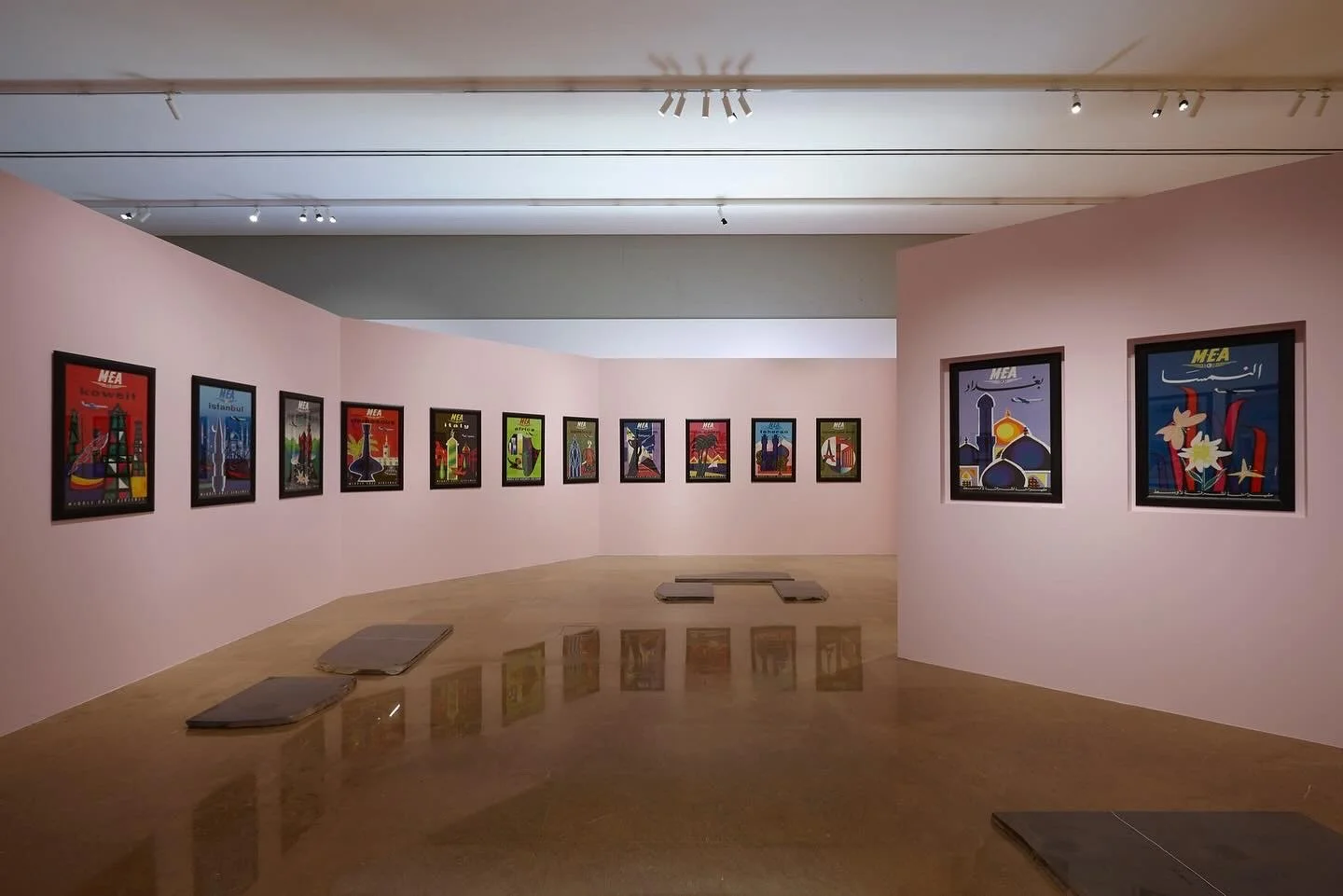
Produced both by local and foreign entities at a time when Lebanon’s tourism industry was flourishing, these posters imagined and marketed Lebanon as a utopia, mirroring a strategy common in international touristic and cultural advertisement in the twentieth century. The fantasies of the country they project, crafted during a period where tourism was a central focus of Lebanon’s economic development, are vibrant, stylized, carefully designed with a Modernist outlook and printed using lithographic techniques, thereby aligning Lebanon with a global visual language of leisure and luxury.
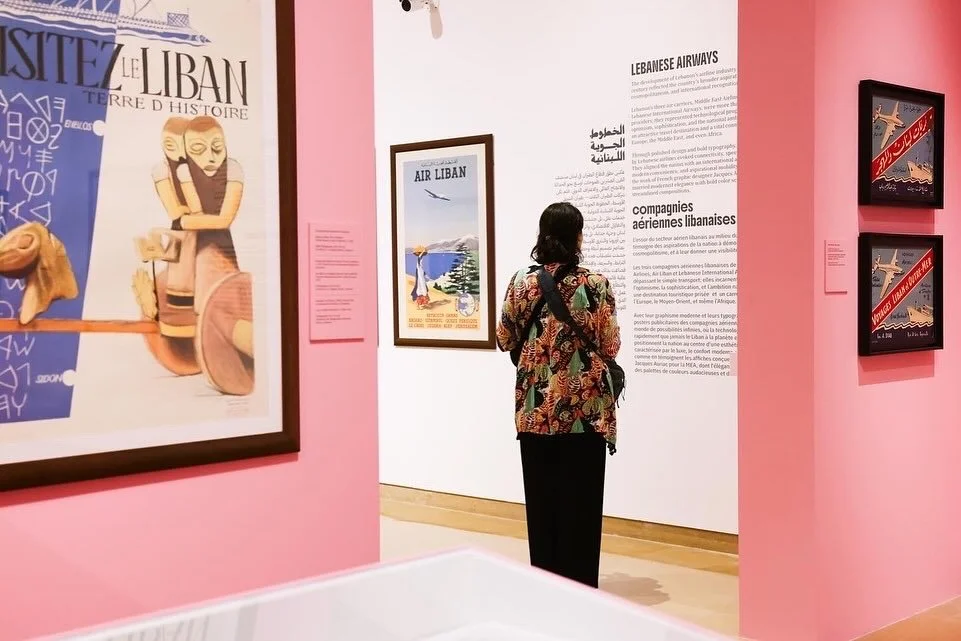
More than advertisements, posters advertising Lebanon in the twentieth century, are fragments of a larger story about modernity, desire, and nationhood. They distill the country into seductive impressions of Pheonician and Roman archaeological sites, golden beaches, pine-clad mountain villages and peaks dotted with Cedar trees, a picture completed with showcases of the country’s modernity, especially in images designed in the 1960s to promote its international festivals and air carriers, which promised to connect Lebanon to distant, exotic destinations.
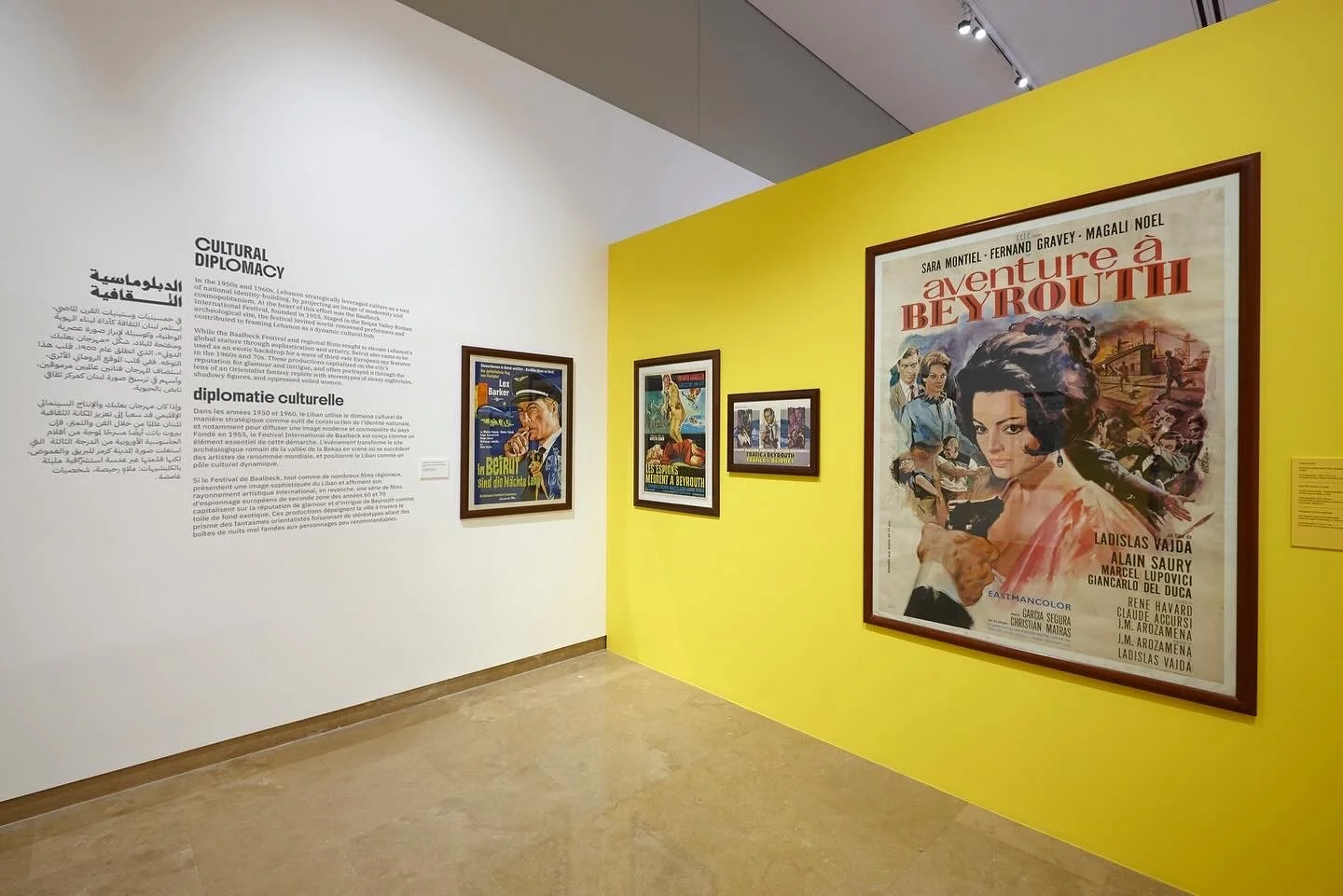
Indeed this period of national promotion was not confined to travel posters: Lebanon’s cultural projection extended into cinema and performance, most notably through the promotion of the Baalbeck Festival, which, starting 1956, brought global stars to these ancient Roman ruins, transforming the archaeological site into a spectacular stage with international resonance. During the 1960s and 1970s, film productions filmed in or evoking Lebanon contributed to shaping how the country was perceived – usually as an Orientalist backdrop for third-rate European spy films, or as the setting of regional productions where celebrities like Lebanese celebrity Fairuz acted to elevate the nation’s cultural stature.
This imagined Lebanon was shaped by selective inclusions and strategic omissions, and reveals how design can function as soft propaganda. The posters were never neutral, but tools to project impressions meant to circulate abroad, shaping how Lebanon might be seen by the world – but they also reflect how Lebanon wanted to see itself.
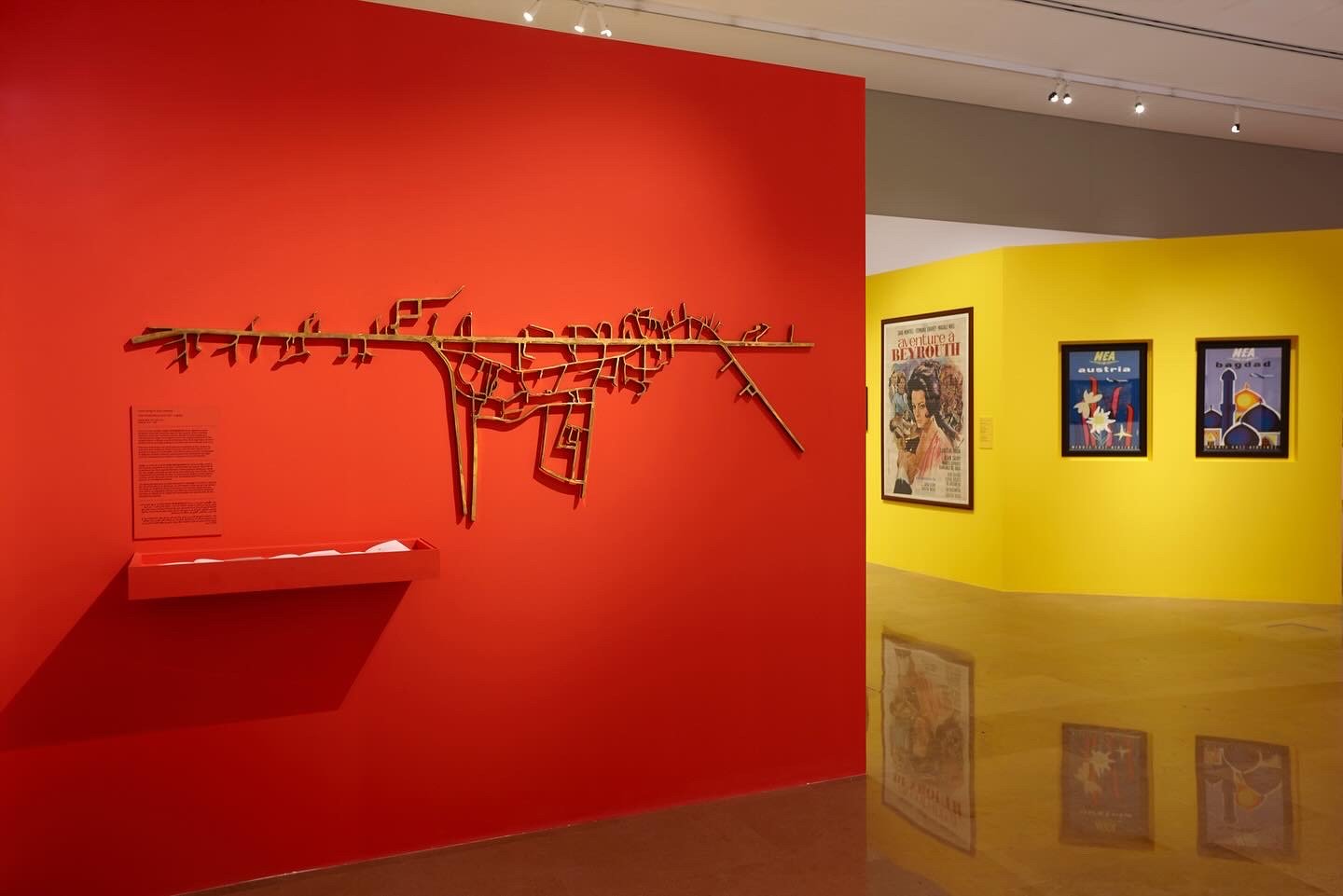
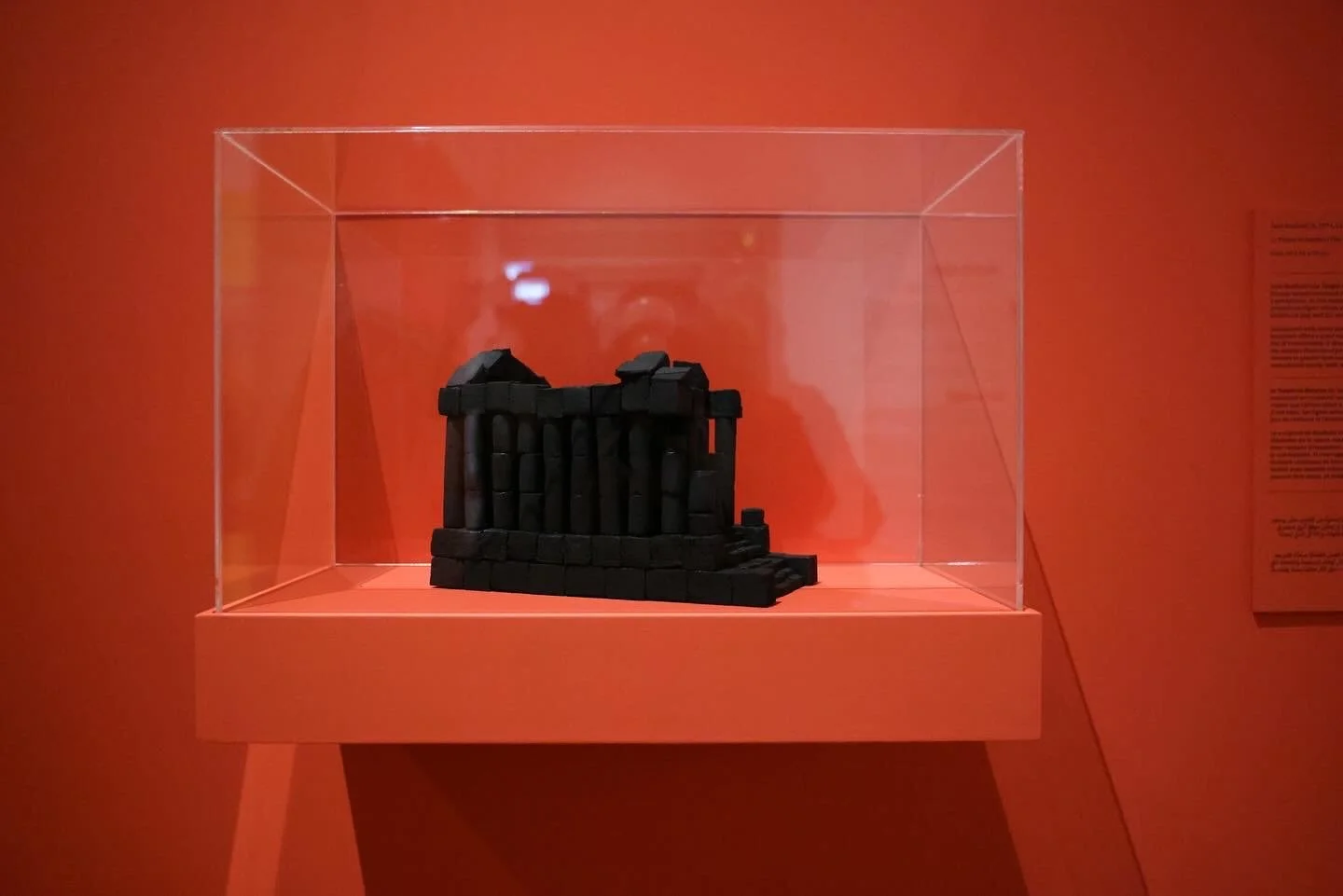
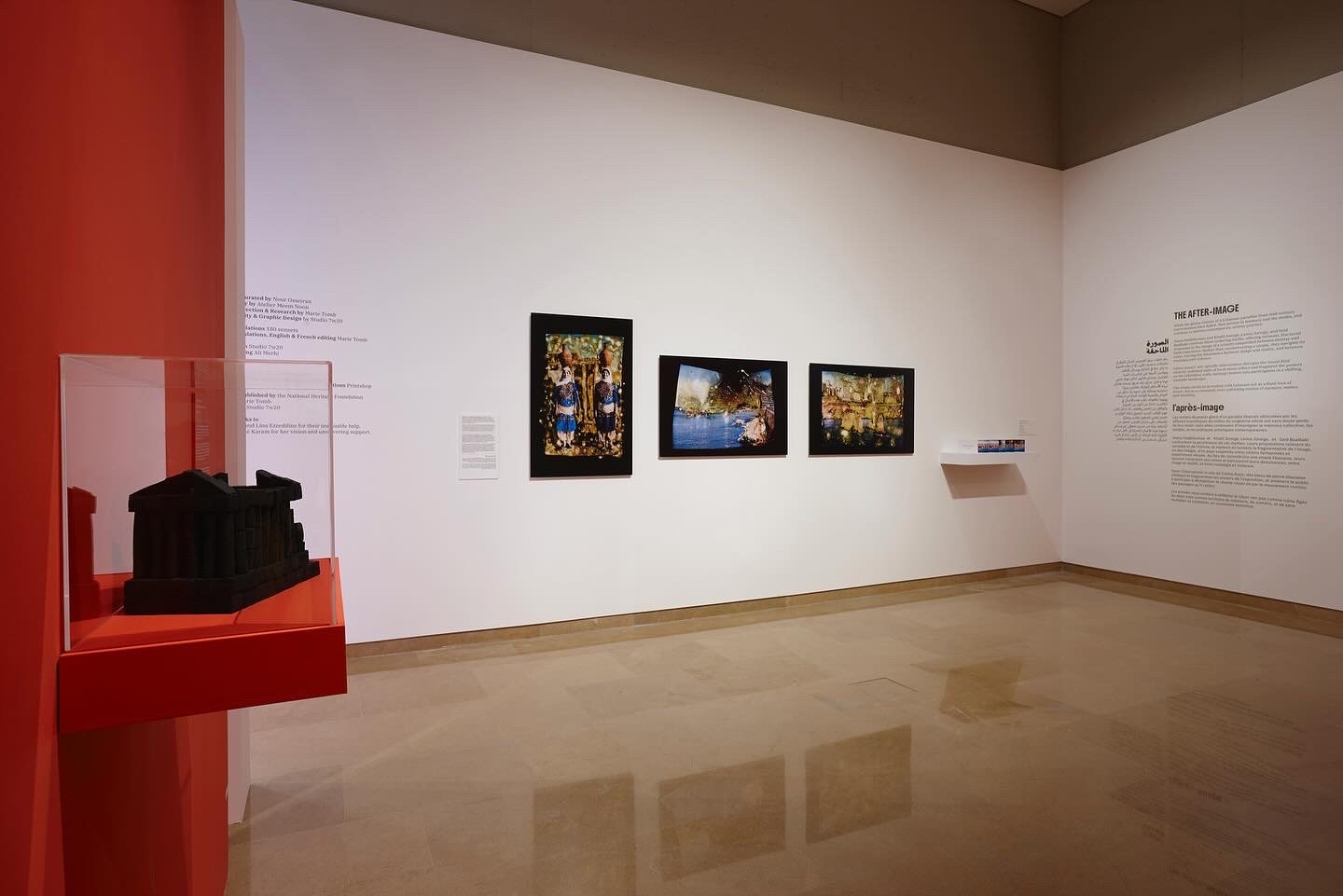
Impressions of Paradise concludes with contemporary artists who respond to such images, not by reproducing them, but by shifting them into other materials, other gestures. If the travel poster captured Lebanon at a distance, suspended in stylized fantasy, their works offer immediate, fractured encounters with the country and its histories. The artists do not seek to reconstruct paradise or mourn its loss; rather, they propose new ways of navigating its fragmented landscapes and lingering traces. Said Baalbaki shatters the illusion of archeological grandeur; Joana Hadjithomas and Khalil Joreige methodically trace the dissonance between Beirut’s imagined beauty and its wartime reality; Lamia Joreige offers a more intimate understanding of Beirut’s geography. Commissioned for this exhibition, Caline Aoun intervenes directly in the material space of display, by reflecting and distorting the image of the posters to invite more precarious forms of seeing.
Impressions of Paradise traverses the shimmering surfaces of a bygone dream and the sedimented layers of its aftermath, opening up timely avenues for reflection on how nations perform themselves visually—and how those performances fracture, mutate, and persist across generations.
Curator: Nour Osseiran
Scenography: Atelier Meem Noon
Visual identity: Studio 7w20
Press